Berber Music & Gnawa: The Heartbeat of Morocco
Discover the soul-stirring sounds of Morocco's Gnawa and Berber music traditions — from sacred rituals to Essaouira's legendary festival.
Close Your Eyes. Now Listen.
You're in a narrow alley in the medina of Fes, and the air is thick with the smell of cumin and cedar. From somewhere deep inside a zellij-tiled doorway, you hear it — a low, hypnotic bass line that vibrates through your chest like a second heartbeat. Clacking percussion joins in, and then a voice rises, raw and ancient, singing in a language that sounds like it was invented specifically for making people feel things they can't name.
That, my friend, is Gnawa music, and once it gets inside you, it doesn't leave.
Morocco's musical landscape is as diverse as its geography — from the snow-capped Atlas Mountains to the Sahara's endless dunes. But two traditions sit at the very soul of Moroccan sound: Amazigh (Berber) folk music and Gnawa spiritual music. Let me take you inside both, because understanding Moroccan music is understanding Morocco itself.
Gnawa: Music That Heals
The Origins
Gnawa music originates from the sub-Saharan African populations brought to Morocco over centuries, many through the trans-Saharan slave trade. Despite this painful history, the Gnawa people created something extraordinary: a musical and spiritual tradition that has survived, evolved, and now stands as one of Morocco's most celebrated cultural treasures.
The word "Gnawa" refers to both the people and the music. It's deeply rooted in spiritual healing — lila ceremonies can last all night and are believed to cure physical and psychological ailments by invoking ancestral spirits. The music is designed to induce hal — a state of trance — and if you've ever been in a Gnawa performance, you'll understand why. The rhythm literally alters your brain waves.
Here's the thing about Gnawa: It was recognized by UNESCO as Intangible Cultural Heritage of Humanity in 2019. This isn't just "cool music to hear at a café" — this is a living, breathing spiritual practice that predates most of the world's religions.
The Instruments
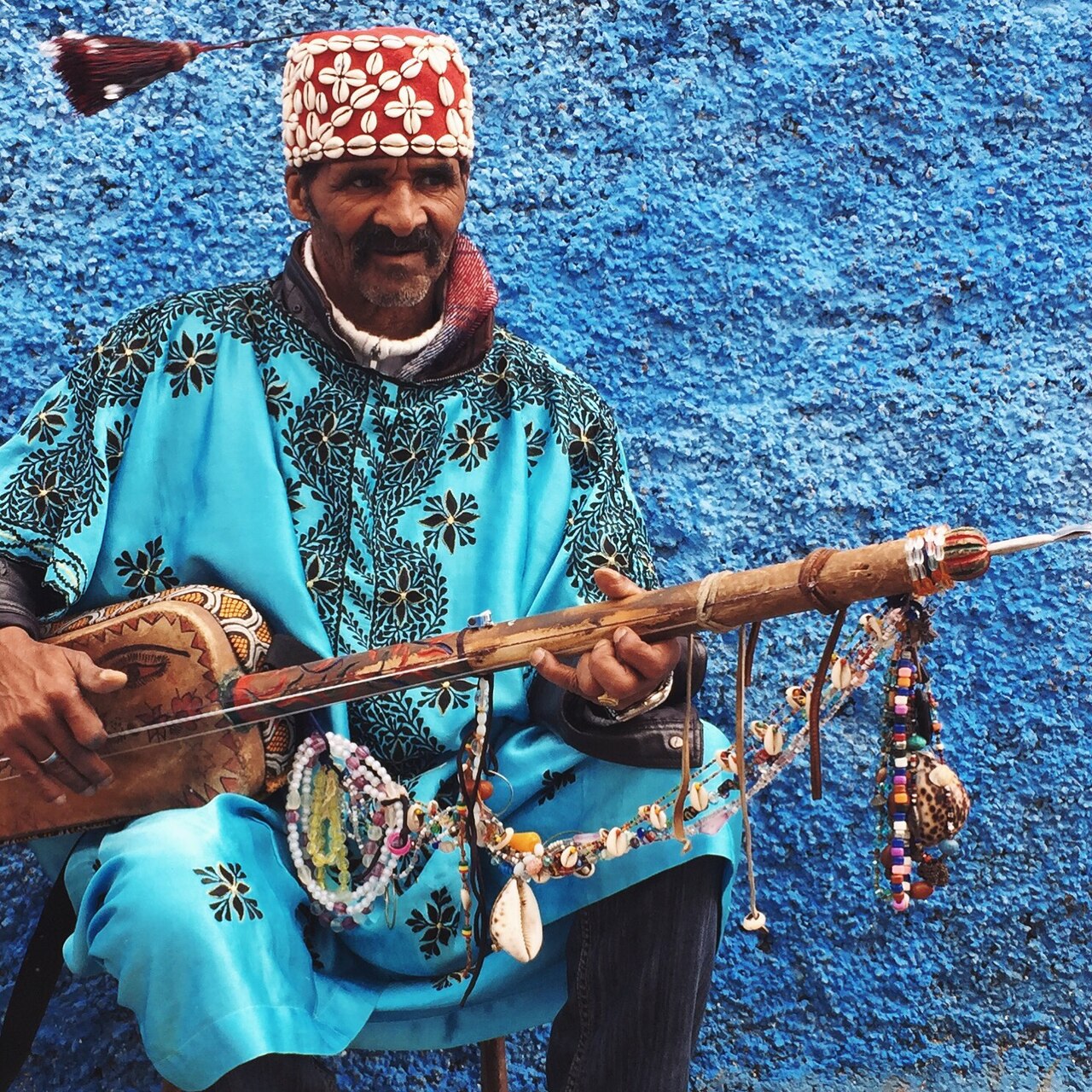
The Guembri (also called hajhuj): This three-stringed bass lute is the backbone of Gnawa music. It's carved from a single piece of wood, covered with camel skin, and produces a deep, resonant sound that you feel more than you hear. Playing the guembri requires years of training — master players (maalems) train apprentices in a guild-like system that's been passed down for generations.
The Krakebs (qaraqeb): These large, heavy iron castanets are the percussion of Gnawa music, and they are LOUD. Each performer holds a pair and claps them together in complex polyrhythms that drive the music forward. The sound is metallic, urgent, and completely addictive.
The Tbel: A large drum that provides the bass heartbeat during ceremonies.
Where to Experience Gnawa Music
- Essaouira Gnawa & World Music Festival — This is THE event. Held annually in June/July, Essaouira transforms into a massive celebration of Gnawa music with performances in the medina, on the beach, and at the legendary Moulay Hassan square. In 2026, the festival is expected to draw over 500,000 visitors. Book accommodation months in advance.
- Rue des Gnawa, Marrakech — Walk through the Mellah (Jewish quarter) in Marrakech and you'll hear Gnawa pouring out of tiny shops. Many Gnawa masters have workshops here and welcome visitors.
- Dar Gnawa, Fes — A cultural center dedicated to preserving Gnawa traditions. You can attend evening performances and even participate in workshops.
- Jemaa el-Fnaa, Marrakech — The main square comes alive at night with Gnawa performances. Sit on the ground, pay a small tip, and let the music take you.
Amazigh (Berber) Folk Music: The Sound of the Mountains
A Thousand-Year-Old Playlist
Before Gnawa, before Arabic influence, before Islam even arrived in North Africa, the Amazigh people were making music in the Atlas Mountains and beyond. Amazigh music is as old as the mountains themselves, and it comes in more flavors than a Moroccan tagine.
The three main Berber music regions each have their own distinct styles:
-
Rif Mountains (Northern Morocco) — Home to Rifi music, characterized by the ghaita (reed flute) and driving rhythms. It's upbeat, celebratory, and often played at weddings and festivals.
-
Middle Atlas — The Amazigh Central style features the lotar (a three-stringed lute) and the naqus (copper cymbals). The singing style (tahidoust) is call-and-response and deeply communal.
-
High Atlas & Sous Valley — Tachelhit-speaking Berbers have a rich tradition of ahwash — collective singing and dancing performed by entire villages. These can last an entire night, with men and women taking turns singing poetic verses in a circle.
Modern Berber Music: The Revolution
Berber music isn't stuck in the past. Artists like Izenzaren, Oudaden, and newer acts like Amine Ait Ramdane have fused traditional Amazigh sounds with rock, reggae, and electronic music. The result is something that sounds like a mountain song played through a festival sound system — and it is incredible.
Pro tip: Search "Amazigh rock" on Spotify before your trip. The playlist will give you a whole new appreciation for Moroccan musical culture. Start with Izenzaren's "Tamurt N'Igherman" and thank me later.
Music Experiences You Can't Miss
1. A Private Gnawa Performance in Essaouira
Many riads and cultural centers in Essaouira offer private Gnawa evenings. You'll sit on cushions in a candlelit room while a Gnawa ensemble performs traditional songs. The energy in the room shifts within minutes — you'll feel your shoulders drop and your breathing slow down. Cost: 200-500 MAD per person.
2. Ahwash in a High Atlas Village
If you're doing a trek in the High Atlas (and you should), ask your guide about village gatherings. Many Berber villages welcome visitors to their ahwash celebrations. You'll sit in a circle, drink sweet tea, and witness something that hasn't changed in a thousand years.
3. Live Music at Café Clock, Fes
Café Clock is a cultural institution in Fes, and they regularly host live Berber and Gnawa music nights alongside their famous camel burgers. It's the perfect introduction to Moroccan music in a comfortable, traveler-friendly setting.
4. The Tbourida Festival
While not purely musical, this fantasia festival features horsemen charging with rifles firing in unison, accompanied by traditional drumming and chanting. It's one of the most dramatic spectacles you'll ever witness.
Quick Darija Music Phrases
Want to connect with musicians you meet? Here are a few phrases:
- "Zwin bzzaf!" — Very beautiful!
- "Fhamtini lghina dyalkum" — I understand your singing
- "Daba, ghira n3ich" — Now, we just live (a famous Moroccan expression about the power of music)
- "Shukran, l3aziz" — Thank you, dear one
The Verdict
Moroccan music isn't background noise for your Instagram Reels — it's a portal into the soul of the country. Whether you're in a trance at a Gnawa ceremony in Essaouira or dancing in a Berber village in the Atlas Mountains, the music will find you. And once it does, you'll hear it everywhere — in the call to prayer, in the rhythm of the souks, in the way the wind moves through the palm trees.
Pack good earphones. But also, leave them in your bag sometimes. The best music in Morocco happens live, unplugged, and right in front of you.