Casablanca 2026: Beyond the Movie — Morocco's Modern Metropolis Complete Guide
Casablanca is more than Humphrey Bogart. Discover Hassan II Mosque, the Corniche, street food secrets, and why Morocco's business capital deserves your time.

"Here's Looking at You, Casablanca" — And No, The Movie Wasn't Filmed Here
Let's get this out of the way immediately: the 1942 film Casablanca was filmed entirely on a Warner Bros. soundstage in Hollywood. Not a single frame was shot in Morocco. Humphrey Bogart never set foot in the city. Ingrid Bergman probably couldn't have pointed to it on a map.
This doesn't stop approximately every tourist who arrives from asking where Rick's Café is.
Casablanca — or Casa, as locals call it — is Morocco's largest city, its economic engine, and its most misunderstood destination. It's not quaint, it's not charming in the traditional sense, and it won't give you the warm-and-fuzzy medina experience that Marrakech does. What it WILL give you is a glimpse of modern Morocco — a forward-looking, cosmopolitan city with stunning Art Deco architecture, one of the world's most spectacular mosques, a thriving food scene, and an energy that's genuinely exciting.
If you're planning Morocco travel 2026 and trying to decide whether Casablanca deserves a spot on your Morocco itinerary, the answer is: yes, but know what you're getting into. This is not a heritage tourism destination. This is a modern Arab-African city with attitude.
The Hassan II Mosque: Worth the Trip Alone
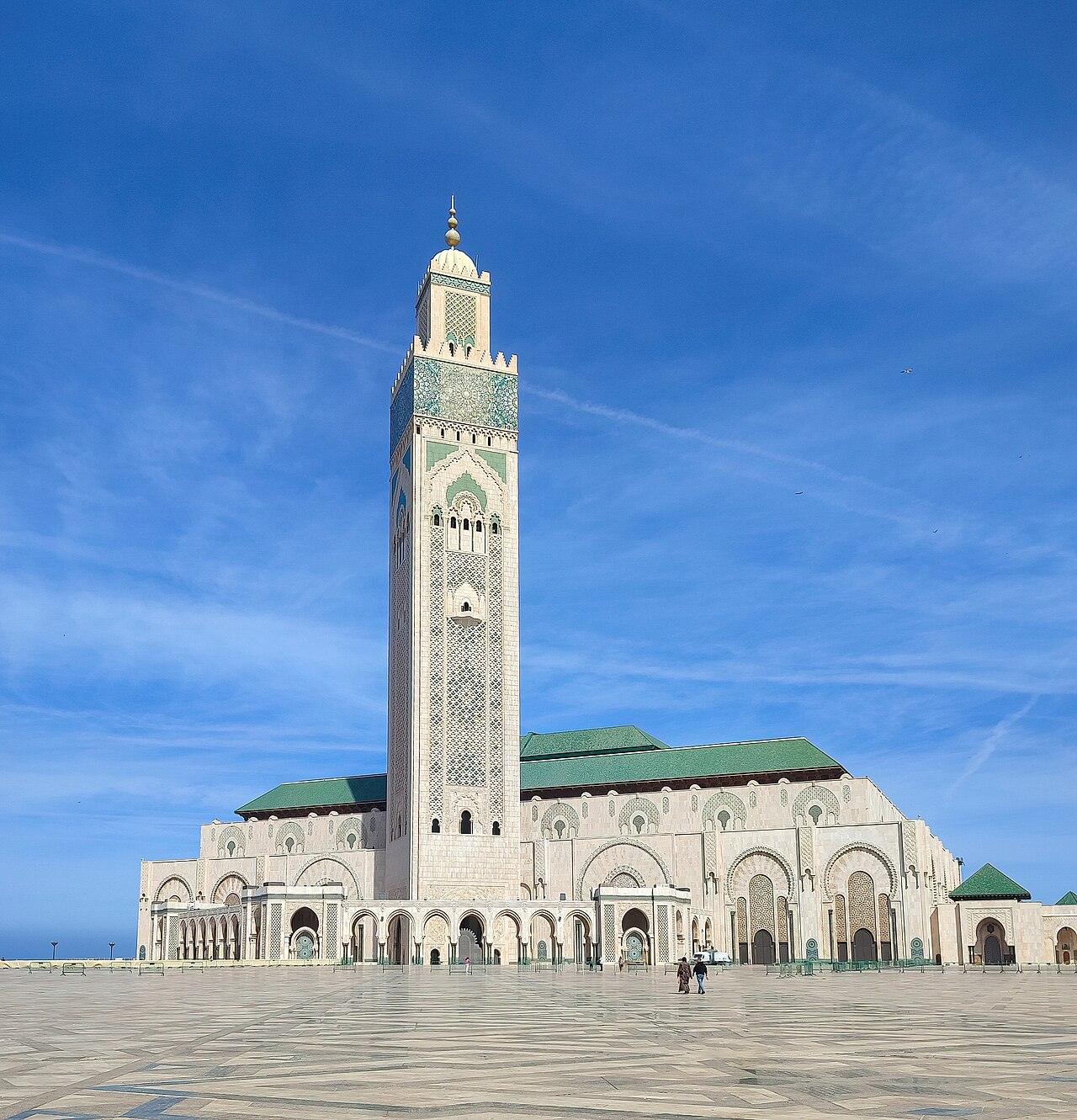
I'm going to say something bold: the Hassan II Mosque is the single most impressive building in Morocco. Yes, more impressive than the Bahia Palace. More impressive than Bou Inania. More impressive than anything your brain can conjure when you hear "stunning Moroccan architecture."
The statistics are staggering. It's the third-largest mosque in the world (after Mecca and Medina). The minaret is the tallest in the world at 210 meters (689 feet). It sits on a platform built directly over the Atlantic Ocean — you can see the waves crashing beneath the glass floor in the main prayer hall. The retractable roof opens to the sky. It took 6,000 traditional Moroccan artisans and 35,000 workers seven years to build. The total cost was approximately $800 million, funded by public donations.
But the numbers don't capture the experience of walking inside and seeing the world's largest retractable roof slide open to reveal the sky, or standing in the basement ablution hall (yes, even the washing room is magnificent) surrounded by fountains and green marble, or gazing up at the minaret from the esplanade and realizing that it's the tallest structure in Africa.

- Cost: 60 MAD for non-Muslims (includes guided tour)
- Hours: 9 AM – 12 PM and 2 PM – 5 PM (Sat-Thu); 9 AM – 11 AM and 2 PM – 5 PM (Friday)
- Tours: Run every 30 minutes and are the only way for non-Muslims to enter
- Dress code: Strict. Women must cover hair. No shorts, no sleeveless tops. If you're not dressed appropriately, they'll lend you a gown at the entrance
- Photography: Allowed everywhere inside. This is rare for mosques.
Trust me on this: Time your visit for the 2 PM tour on a clear day. You'll get the best light for both the interior and the exterior. And when the guide opens the roof, the natural light pouring in will give you chills.
The Corniche: Casablanca's Seaside Soul
The Corniche is Casablanca's oceanfront promenade, stretching for several kilometers along the Atlantic. It's where the city comes to breathe — joggers in the morning, families in the afternoon, and couples at sunset when the sky turns pink and the lighthouse starts blinking.
What to do on the Corniche:
- Walk or jog the promenade at sunset — it's the city's most democratic space, where wealthy businesspeople and working-class families share the same path
- Eat at the seafood restaurants — places like La Sqala (housed in an old fortification) serve excellent seafood in a gorgeous setting
- Visit the Morocco Mall — one of Africa's largest shopping malls, with an indoor aquarium and every international brand imaginable. It's gauche and enormous and kind of wonderful
- Surf — yes, Casablanca has surf. The waves at Ain Diab beach are consistent, if not world-class
The Old Medina and Rick's Café
Casablanca's medina is smaller, grittier, and less tourist-friendly than Marrakech's or Fes's. It can feel sketchy in places, and the aggressive touting is worse than elsewhere. But it has character, and if you approach it with street smarts, there are rewards.
Quick tips for the medina:
- Go during daylight hours
- Don't wear flashy jewelry or wave your phone around
- Be firm (but not rude) with touts
- The spice and food markets near the Marché Central are the highlights
And then there's Rick's Café. Yes, it exists. No, it has nothing to do with the movie (as established, the movie wasn't filmed in Morocco). An American woman named Kathy Kriger opened it in 2004 as a loving homage to the film, and it's become one of Casablanca's most popular tourist stops.
Here's the honest truth: the food is decent but overpriced, the cocktails are fine, and the whole experience feels a bit theme-park-ish. But you know what? Sometimes you just want to sit in a room that looks like the movie and order a drink and pretend Humphrey Bogart is about to walk in. That's valid. Do it once, check it off the list, then go find a restaurant where actual locals eat.
Art Deco Architecture
One of Casablanca's hidden gems is its extraordinary Art Deco heritage. In the 1920s-1940s, French architects designed hundreds of buildings in the Art Deco and Neo-Moorish styles, and hundreds of them still stand in the city center.
Notable buildings to seek out:
- Cinema Rialto (operating since 1930)
- Villa des Arts
- The old Lincoln Hotel
- The Central Post Office
- The former Galeries Lafayette building
The best area to explore is around Boulevard Mohamed V and Place des Nations Unies. You can easily spend a couple of hours just wandering and photographing these buildings. Many are in various states of decay, which adds to the atmosphere, but there's a growing preservation movement that's saving some of the most significant structures.
For architecture nerds: The combination of Art Deco lines with traditional Moroccan zellige and geometric patterns creates a uniquely "Casablanca" style that doesn't exist anywhere else. It's the architectural equivalent of fusion cuisine, and it works beautifully.
Nightlife and Modern Culture
Casablanca has by far the most active nightlife in Morocco. From rooftop cocktail bars to underground music venues, this city knows how to go out. Some recommendations:
- Sky 28 — Rooftop bar with panoramic city views. Pricy but worth it for the perspective.
- Le Baroque — The oldest bar in Casa, serving drinks since 1927. Wooden panels, leather seats, history.
- The White Room — Modern cocktail bar with craft drinks and a DJ.
- Live music scene: Check out complex cultural venues like the Villa des Arts for concerts and exhibitions.
Note: Morocco is a Muslim country, and while alcohol is available in licensed venues, public intoxication is deeply frowned upon and illegal. Be respectful and moderate.
Street Food Secrets
Casablanca's street food scene is underrated and incredible:
- Bocadillos — Morocco's answer to the baguette sandwich, stuffed with everything from grilled sardines to spicy merguez sausage. Available everywhere for 15-25 MAD.
- Maaqouda — Fried potato patties, crispy on the outside, fluffy inside. Sold at tiny stalls. Dip them in harissa sauce.
- Fresh-squeezed orange juice — 5 MAD for a glass. The best is near the Marché Central.
- Sfenj — Moroccan doughnuts, fried to golden perfection and dusted with sugar. Best eaten within 30 seconds of leaving the fryer.
Practical Tips
- Getting there: Mohammed V International Airport (CMN) is Morocco's main international gateway. Most long-haul flights arrive here. The train connects the airport to the city center in 30 minutes.
- Getting around: Taxis (petit taxis for short trips, grand taxis for longer) and the tram system cover the city well. The Casa Tramway is modern and efficient.
- Safety: Casablanca is generally safe but has more petty crime than other Moroccan cities. Use the same urban awareness you'd use in any large city.
- Time needed: 1-2 days is sufficient for most travelers. It's worth at least one night.
- Best time: Spring and autumn. Summers are humid (the Atlantic makes it sticky, not pleasant).
Casablanca isn't the Morocco you see on postcards. It's the Morocco that's building the future. And honestly? That's the most interesting version of all.